
From the journal
Where the water goes
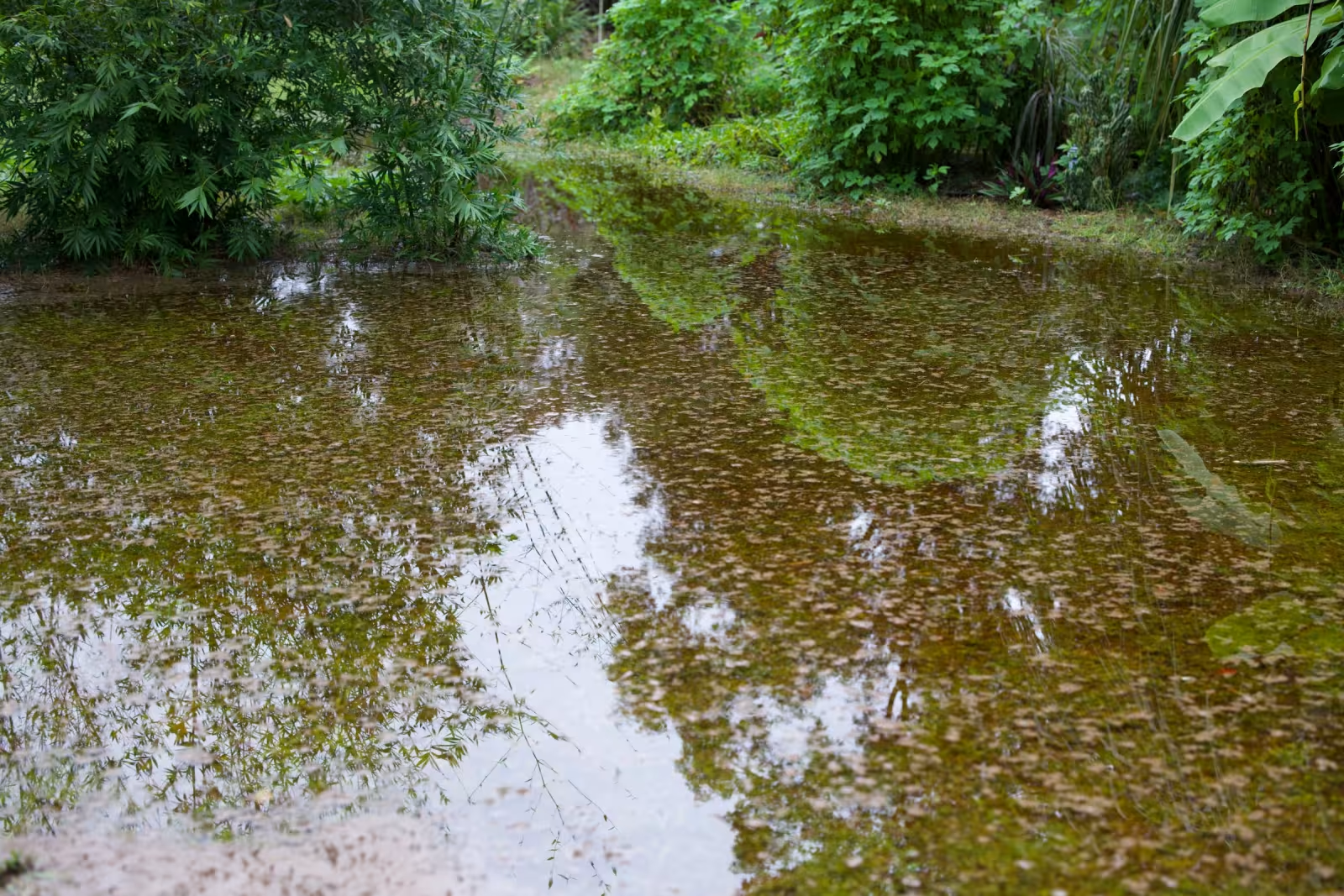
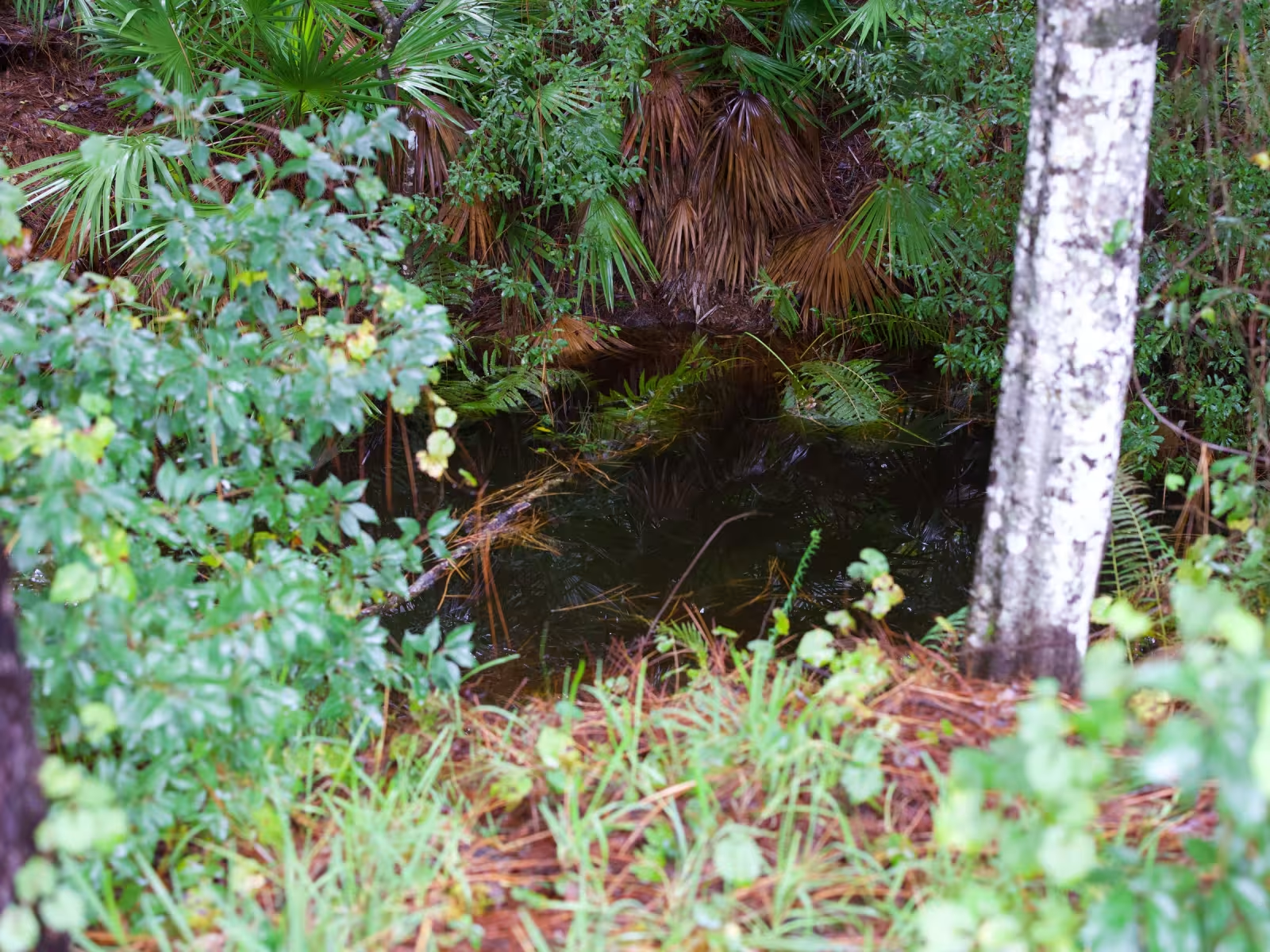
It rained for days, and then a storm came in on top of all that water. My neighbor says we got over 10 inches in 24 hours. The gauge at Mount Plymouth, next to Sorrento, logged 4.34 inches over 72. I don't have a gauge of my own yet, so I'm working on that. From my office loft in the Lab, I watched the low spot by the food forest fill up until the water sat about 10 feet from the house.
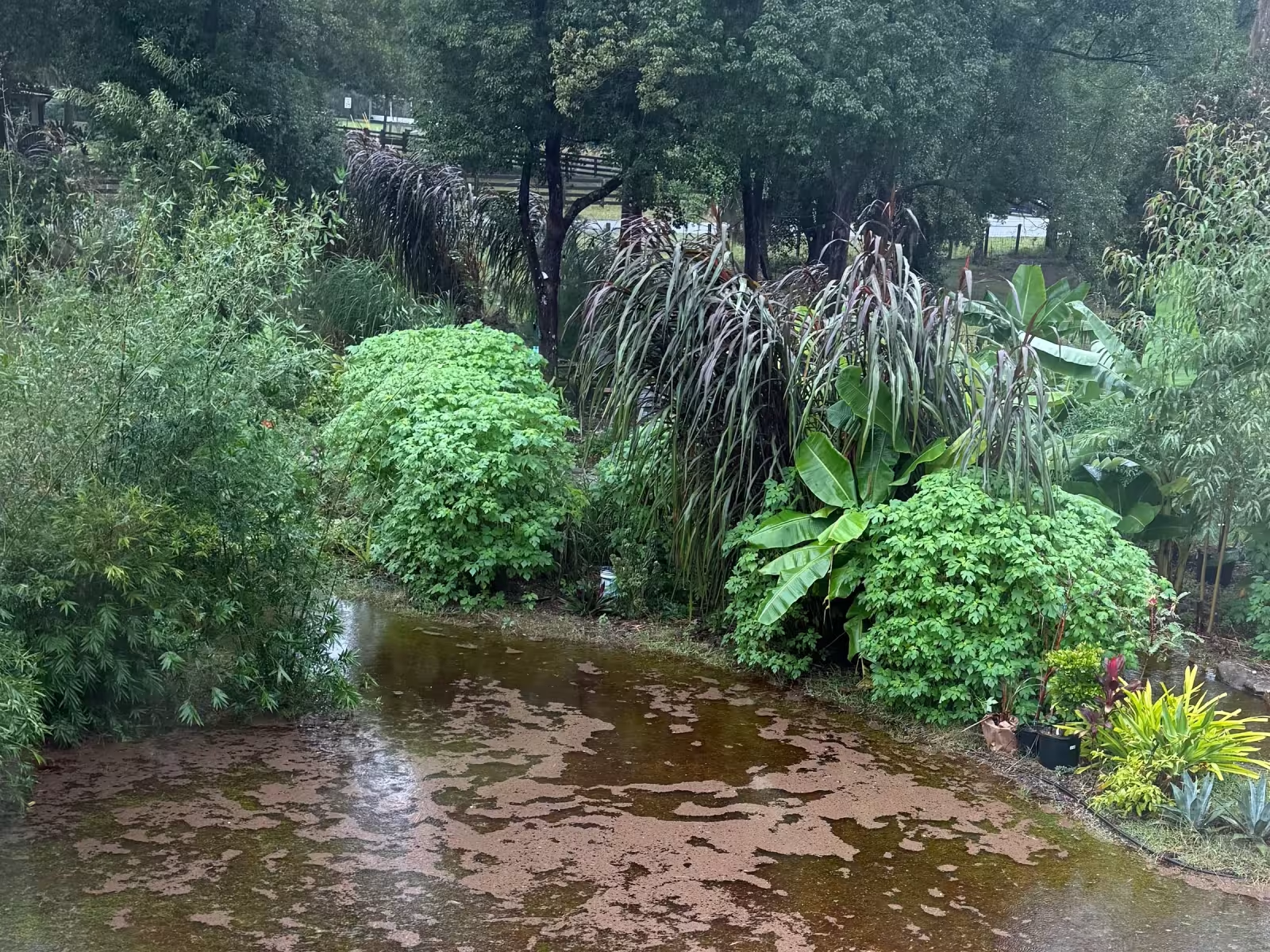
I don't want to downplay it: I have a drainage problem. But a storm like this also shows me exactly how water moves across the property, or in this case, how it doesn't. And once I can see that, my mind starts running with ideas to fix it, and to improve how the garden gets watered and how it looks while I'm at it.
It's happened before
About three years ago, a few hurricanes dumped a lot of water here, and I had the same problem. That water came fast and left fast. This storm was slow, and now the ground is fully saturated, so nothing is draining.
The low spots came with the land. The one by the food forest sits between the house and higher ground, so water sheds off both sides and settles there. I've already brought in fill dirt, and it used to be even lower. It still collects water.
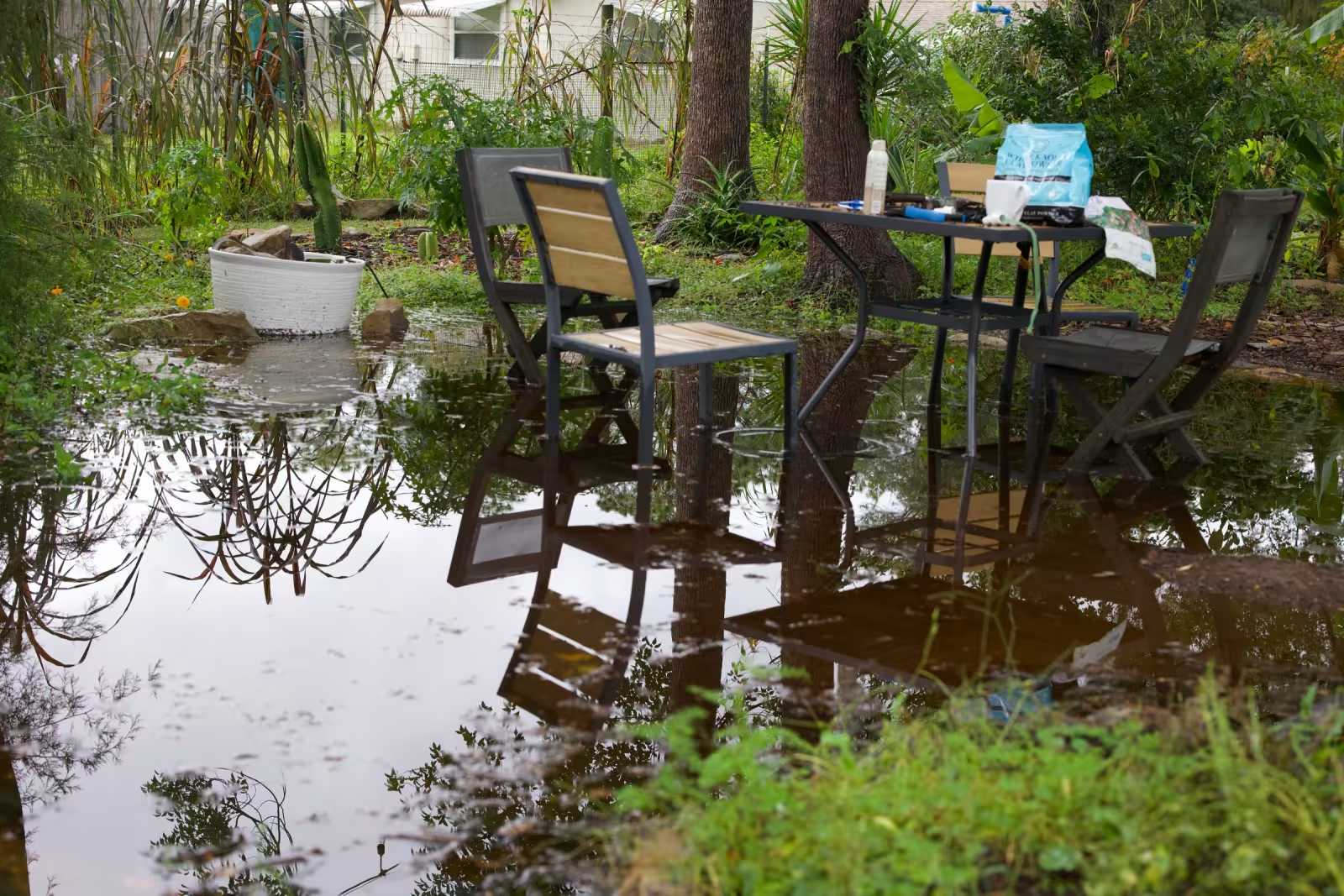
The sitting area in the middle of the Whispered Wild, the butterfly garden, is another one. I never added fill there. It was like this when I got here.
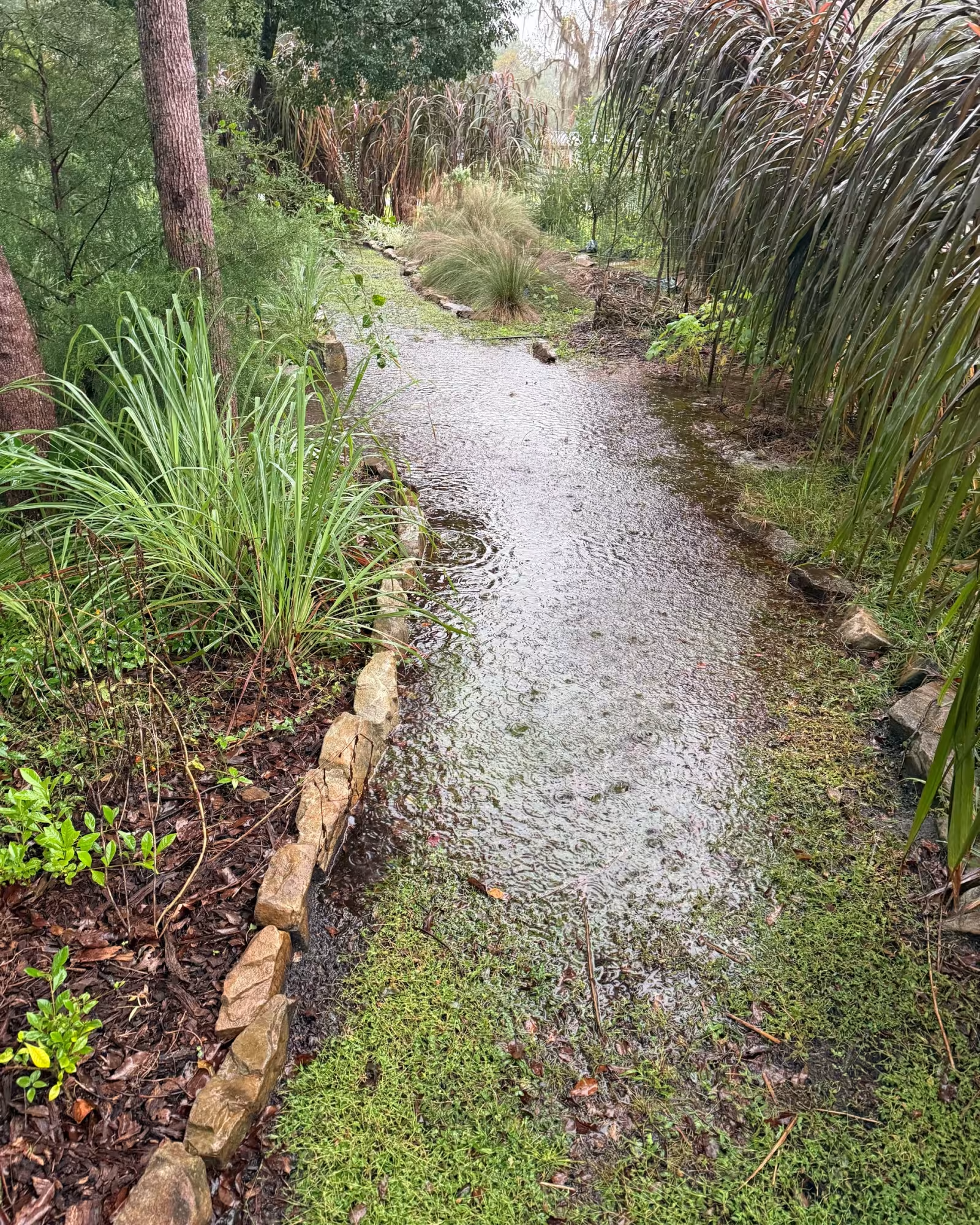
The path from the sitting area out to the northern property line ran like a creek, right past the apple, plum, and pear trees. I'd planned to lay stone on it. Now I think it needs to be built up first, so it stays walkable in a storm like this. The catch is that a higher path pushes more water into the sitting area.
What's at stake
The water near the house concerns me most. I put a very thick vapor barrier and sealant under the slab, but water pooling that close to a foundation still isn't good. The trees are the other worry. If water sits around a tree too long, the roots start to die. The pear and the plum are closest to it. The Brogdon and Bacon avocados are nearby, but both are planted higher than the water is now.
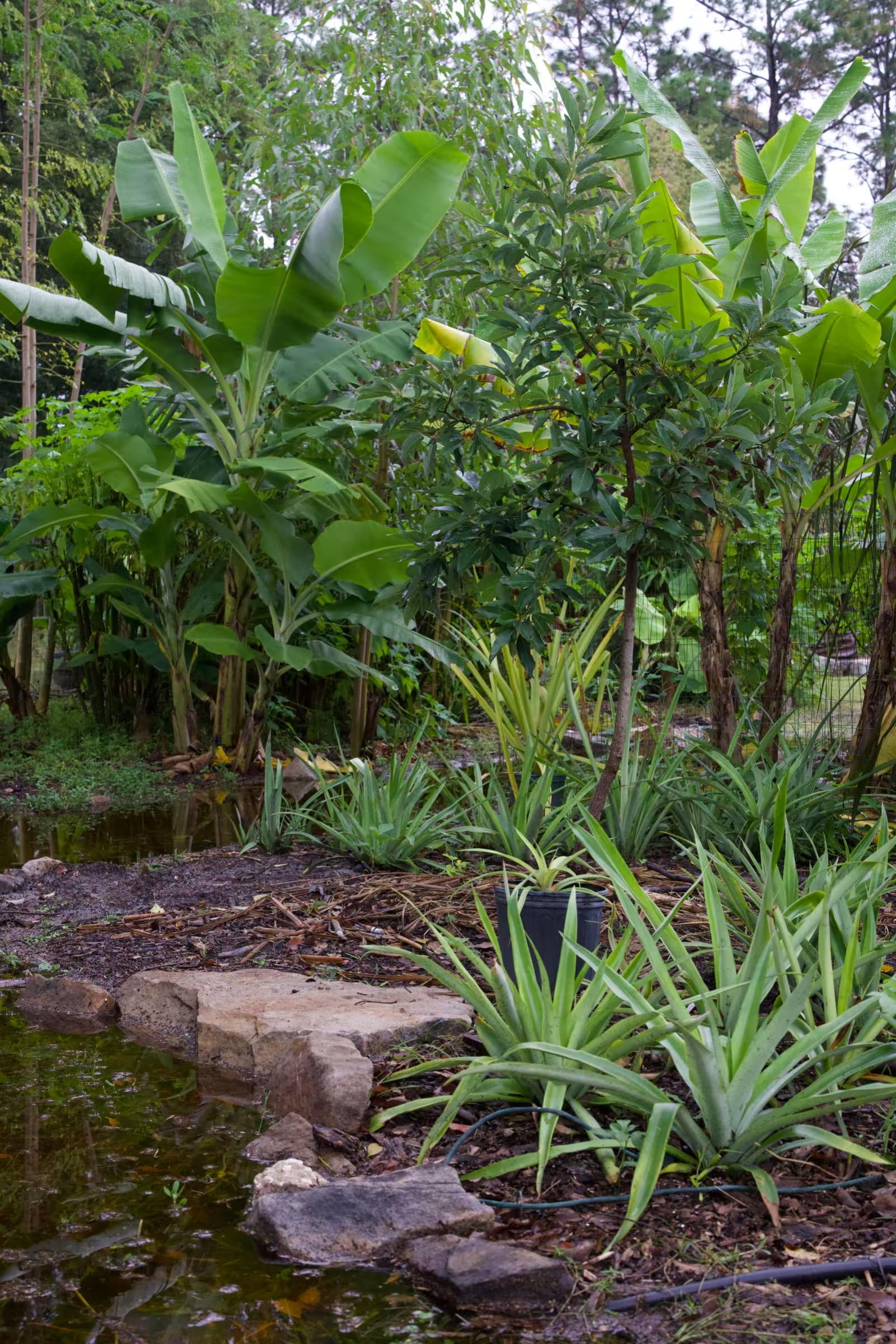
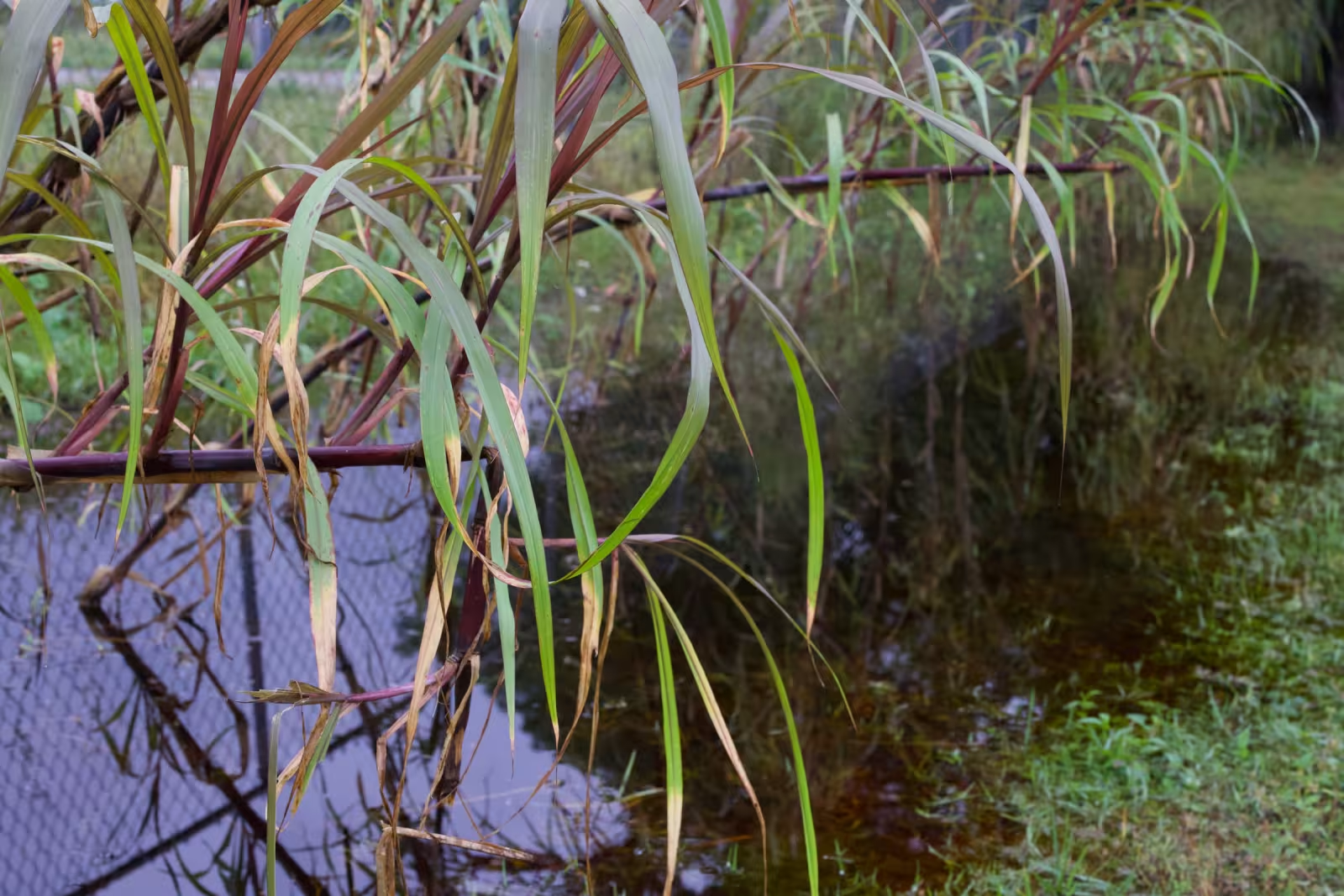
There's also a lot of Napier grass in the swale along the south property line, which takes the runoff from the house. I'm not sure how this much water will affect it. Napier is on Florida's invasive plant list, and I'd rather say so than have someone point it out. It isn't banned, but it needs managing to reduce the risk. I pull the canes that fall over, because those are the ones that sprout and spread.
The idea: a dry creek
What I keep coming back to is a dry creek. I love Japanese gardens because they focus on simplicity, design, earth, rock, water, and texture, and I've wanted to bring some of that into this garden. I especially love rocks and boulders. A dry creek is made of exactly those things.
It would also be the swale. Most of the year it would be a bed of stone. In a storm like this one, it would collect the water, and the berm would be where the food forest bed starts, so the water soaks into the bed instead of standing on the grass. A creek doesn't hold more water in one spot. It spreads the water along its whole length, so the ground can take it in. The roof water could run down it to the food forest too, which keeps it away from the foundation and puts it where the trees can use it.
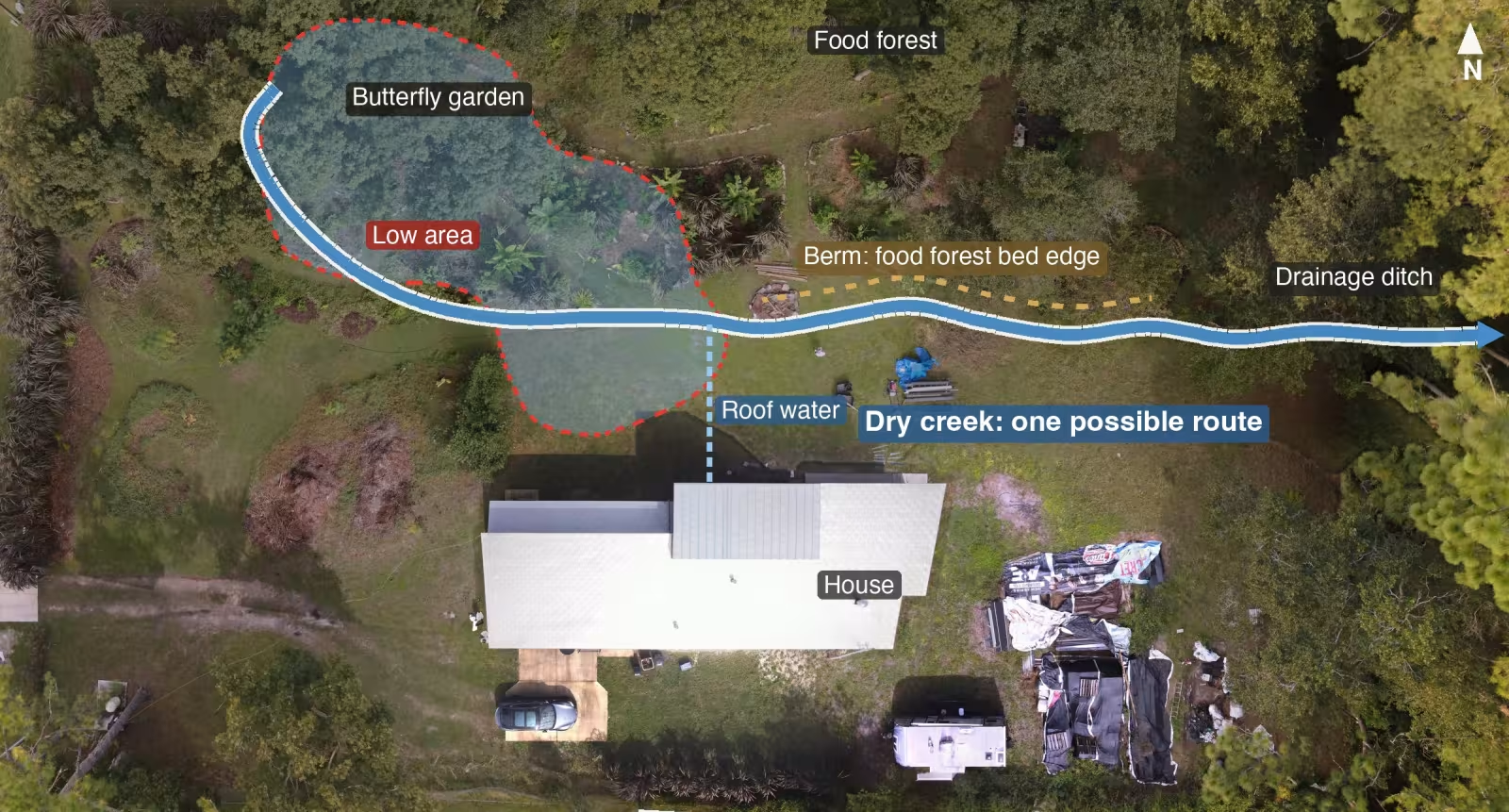
The hard part is placement. The creek has to start in the middle of the property, around the butterfly garden, and run all the way to the drainage ditch at the back, swinging around the sitting area on the way. It also has to work with the walkways. I love bridges, so that part I'm looking forward to: a few of them in the right places.
It's a big job. I'd have to design it into the garden, not just dig a trench, and hire someone to excavate a huge amount of dirt. The good news is that the dirt can fill the other low spots. My real concern is building it right. I don't want erosion to undo all the work that went into it.
I won't get to it any time soon. It's still raining, so for now we'll see how much this affects the garden, especially the plants next to or in the standing water.
Stephan, the Backyard Alchemist.